A robotic platform for the food & beverage industry.
3 locations · livePalo Alto, CAChampaign, IL
wefunder.com/yummyBacked by Y Combinator S19 · Soma Capital · Asymmetry Ventures
TrajectoryQuarterly POS · three stores · not annual figures
Every 2026 quarter has more than doubled its 2025 YoY.
The record is simple. One store in 2023. Two by 2024. Three by 2025. And in every quarter of 2026, total point-of-sale across all three stores has more than doubled year over year: +114% in Q1, +137% in Q2, and +176% through September 2 in Q3 — on comparable days.
Three stores, all performing, growth accelerating. For a hardware company, that’s the highest-signal evidence of capital efficiency we can offer: the money we deploy turns into revenue quickly, and the flywheel is already spinning. We built it on a shoestring. Give us abundant capital, and we add stores to a machine that’s already compounding.
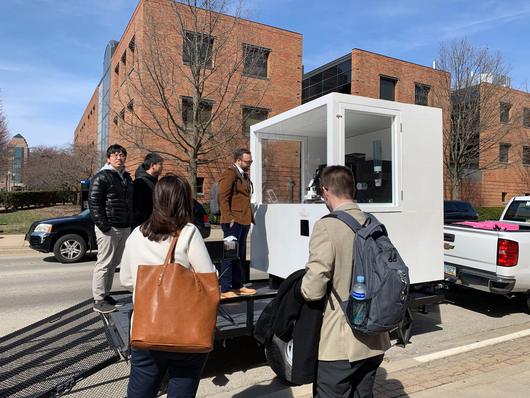
Cozad New Venture Challenge, the Alexa Prize, then YC S19 Demo Day.
2025 · Oct
Palo Alto opens
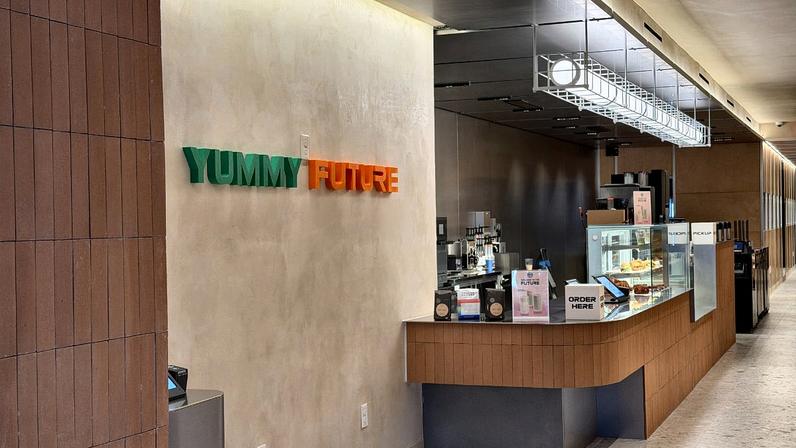
170 University Ave, Palo Alto.
2026 · Mar
Matcha House rebranding launch
Champaign 401 — same unit, new concept.
Next
A more compact MAX
The next platform iteration — a plan, not a shipped product.
Jack Cui
Co-founder · CEO
10 years robotics. B.S. EE, M.S. ECE — UIUC. Google hardware, 2018. Built the unit.
Garrett Yan
Co-founder · COO
7 years in engineering & operations. M.Eng., UIUC Grainger. Runs the operation every day.
Hao Ouyang
Robotics
M.S., UC Berkeley. RoboCon world champion. Owns the robotics build.
Around them: the store crews who open the doors, work the bar, and tell us what broke.
Yummy Future · Mission 001 · Wefunder 202603 / 20
Cap tableFY2025 SAFE inflow $970,723 · audited · full breakdown in the data room
$4.7M
Raised to date.
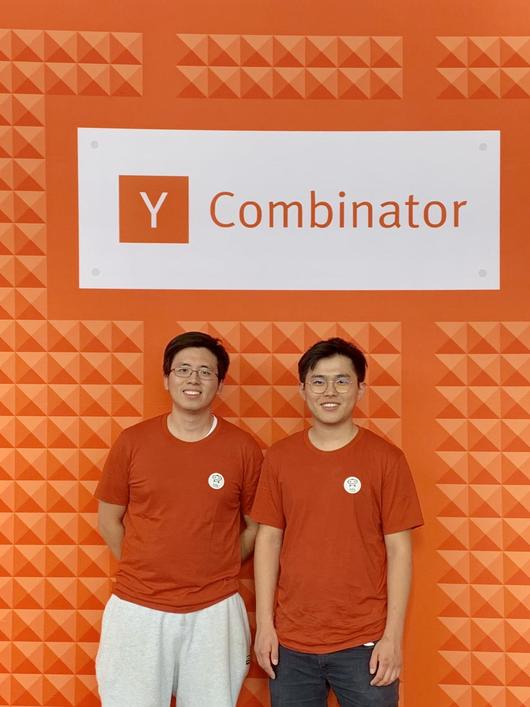
Founded September 2018 at the University of Illinois; joined Y Combinator in 2019.
Y Combinator Demo Day · 2019
S19
Y
Y Combinator
Seed-stage backer
Multi-stage
SOMA CAPITAL
Soma Capital
Early backer
Fund
ASYMMETRY
Asymmetry Ventures
Transformative tech fund
Angel
Trevor Blackwell
Y Combinator cofounder · OpenAI founding member
Angel
Justin David Hamilton
Founder & CEO, Clutterbot
Yummy Future · Mission 001 · Wefunder 202604 / 20
Problem
Industry pain point
Restaurant industry lags furthest behind, across geography and industry.
Factories spent forty years engineering the repetition out of the work. Food service never adopted automation at all — the industry still runs on hands.
Industrial robots per 10,000 workers
South Korea
1,220
Germany
449
Japan
446
US manufacturing
307
China
166
Global average
132
US food service
≈0
Published industry benchmarks — they describe the category, not Yummy Future's own results. IFR World Robotics 2025 (2024 data), manufacturing. Food service: no published density benchmark exists — that bar is our own estimate, not a cited figure.
130%
Annual turnover among front-line food-service roles
Black Box Intelligence (TDn2K People Report) · DailyPay
30–35%
Of restaurant revenue goes to labor
National Restaurant Association · BLS food services (NAICS 72251)
01
The job grinds people down
The work is physically demanding, mentally numbing, and endlessly repetitive — the same shot, hundreds of times a day. The barista who knows the regulars, picks the music, and runs the store spends most of the shift on the half of the job that needs none of that.
02
The boss is always hiring
Every new hire costs weeks of training, and at that rate the store never stops onboarding. Recruiting, training, and managing a crew that keeps walking out: it’s the biggest hidden cost behind the bar.
03
The customer never gets the same cup twice
Quality depends on who’s on shift and how long the coffee has sat. One visit the espresso is dialed in; the next it’s been sitting in a pot for an hour. The product is never consistent — and when the crew is stretched, the service slips with it.
Yummy Future · Mission 001 · Wefunder 202605 / 20
ThesisMove humans up the value chain
Take the repetitive work off humans. Move them up the value chain.
A specialty barista spends the whole shift repeating the same motion — pulling shots, steaming milk, whisking matcha. Yet that same person is why customers come back: they know the regulars, pick the music, run the store. The work that builds the brand is the work a machine can’t do.
So we amplify productivity with a robot that takes over the repetitive prep. That frees people to spend their shift on what only they can do — the welcome, the menu, the brand, the ownership. And freed-up people serve better: warmer, sharper, more consistent. That’s how a business stays competitive — not by running people harder, but by letting them do the work that makes service great.
~60
Part-time jobs across three stores — the unit took the repetitive half of the shift, not the job. Same craft. Better job. Better business.
Yummy Future · Mission 001 · Wefunder 202606 / 20
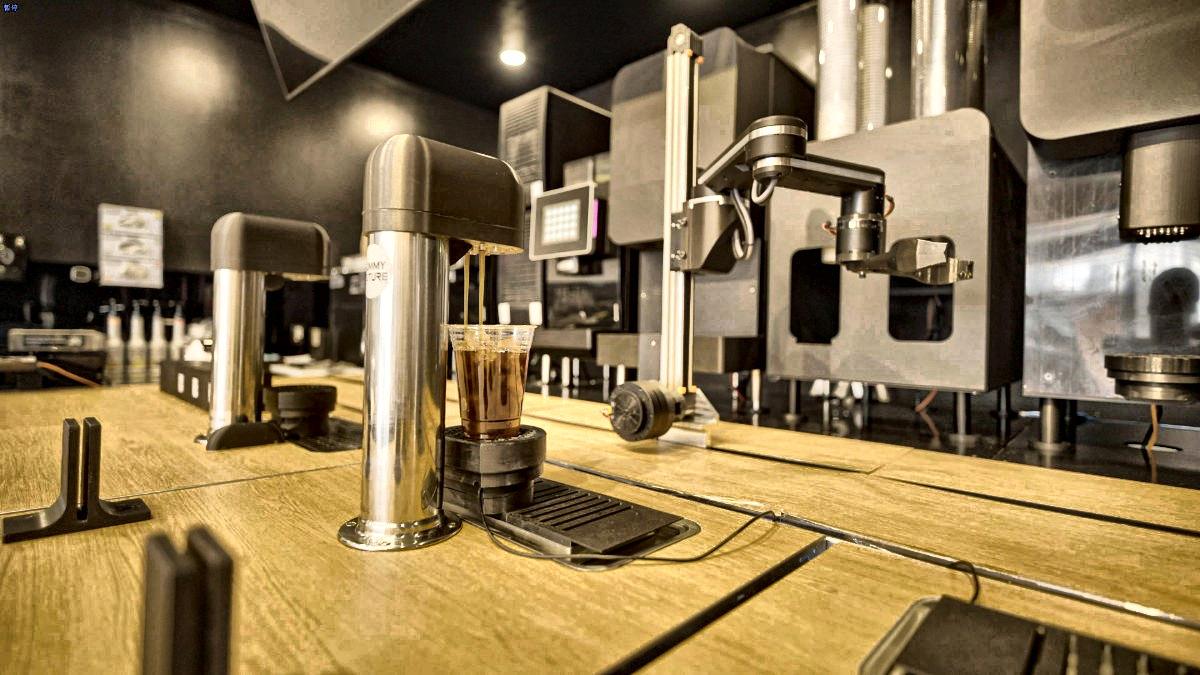
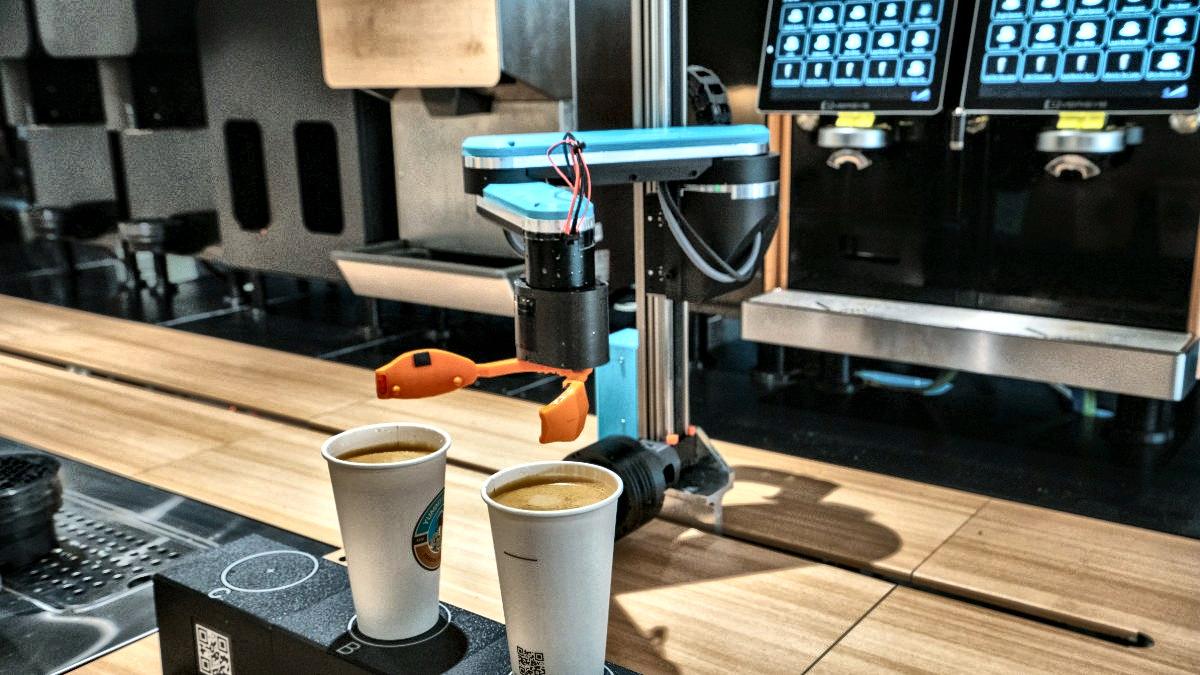
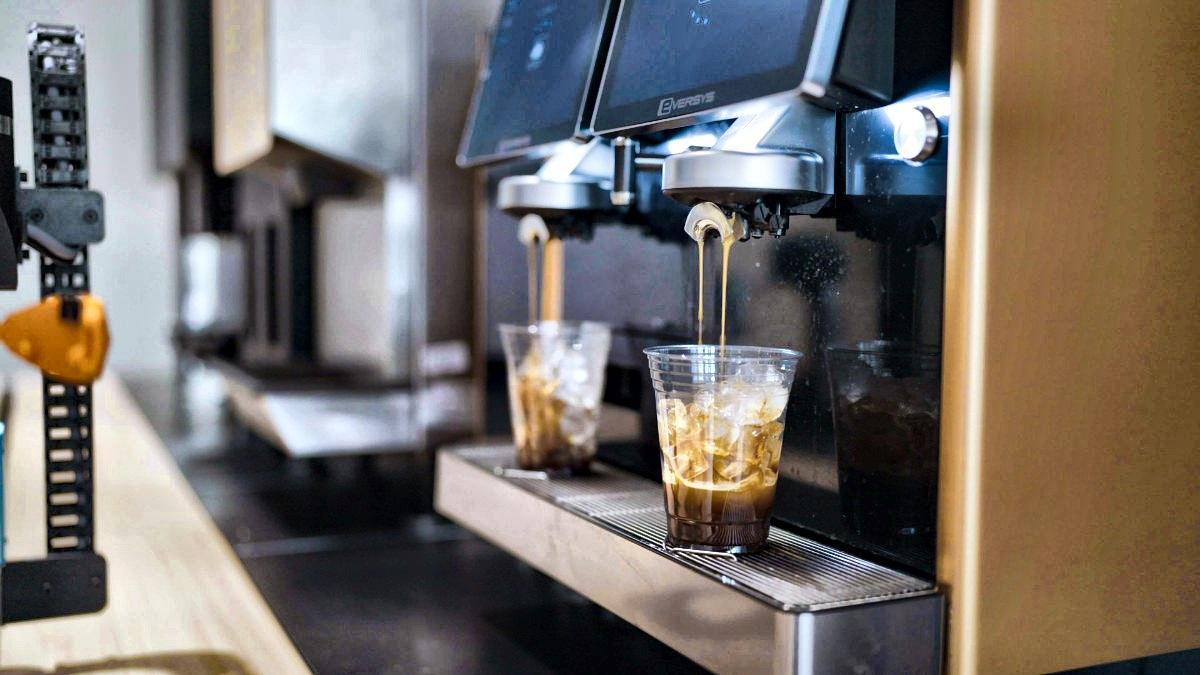
ProductCurrent production hardware · photographed in 2026 · working behind the bar today
We build the MAX system. Operators just run it.
CoffeeMatchaCocktailsTea
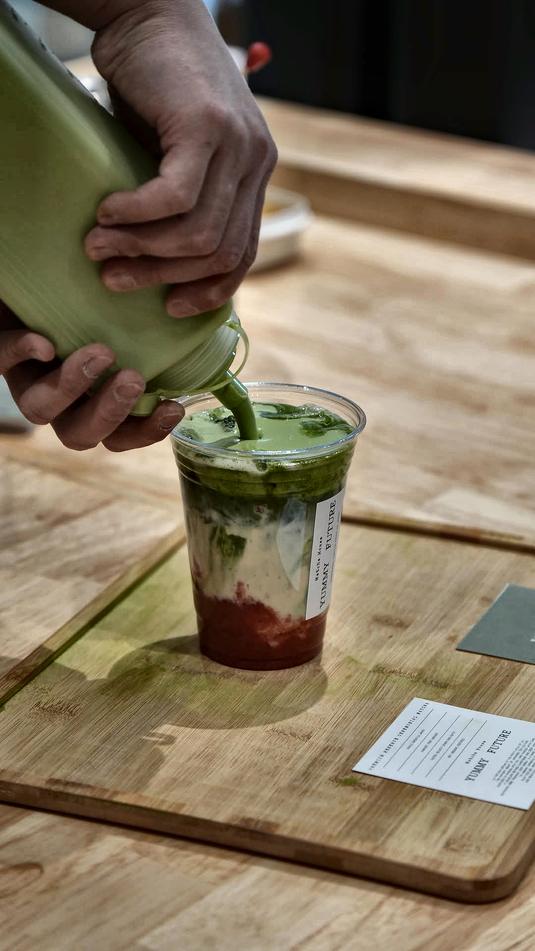
MAX is a complete robotic drink platform — not just a robot arm. Hardware, software, payments, inventory, and supply chain all come together in one system. Everything an operator needs to run a drink business, with no robotics expertise required.
The system pours coffee, matcha, and cocktails today, with tea already designed into the same arm. Up to 80 drinks an hour, consistently — no shifts, no turnover. It’s live in three stores today, the same system in all three.
We’re collecting real data and running real training on it — every drink poured in a live store is a training signal, not a demo. That’s the flywheel: more stores, more data, smarter robots. From there, MAX learns to plan automatically, recover from failures on its own, use more tools and more data — and clean and maintain itself — until the shop runs itself.
Forward statements describe plans, not guarantees. Actual outcomes may differ. See Form C and risk factors.
Yummy Future · Mission 001 · Wefunder 202607 / 20
TractionOur own point-of-sale records · three stores · Sep 2023 – Aug 2026 · 240,000+ cups
Novelty gets one visit. 7,367 people are on their fifth.
49,876
Customers we can name
Distinct phone numbers. Walk-ins who leave no number are not counted, so the real base is larger.
18,548
Have come back
37% of everyone who ever gave us a number. Not a trial crowd — the same people ordering again, months apart.
7,367
On their fifth order or later
81% of the money came from someone who had ordered before — measured across the orders that carry a number.
Yummy Future · Mission 001 · Wefunder 202608 / 20
The one line
One robotic platform. Three stores. Running at an annual pace of
$1.3M
Annualised run rate · Q2 2026, the last complete quarter, × 4
$1.7M+
In sales since 2023
All three stores are open to the public. Both figures are read off the monthly point-of-sale record — the run rate is arithmetic on a quarter that has already been banked, not a forecast.
Yummy Future · Mission 001 · Wefunder 202609 / 20
Capital efficiencyEvery food-service robotics company that publishes its numbers
Every dollar we raise goes fifteen times further than the field’s best.
Company
Capital raised
Revenue annual run rate
Net loss FY2025, consolidated
Revenue per dollar raised
Yummy FutureQ2 2026 × 4 · POS, incl. sales tax
$4.7M
$1.3M
$(1,217,816)
28.3¢
Serve RoboticsNASDAQ: SERV · Q2 2026 × 4 · 10-Q
$673.8M
$12.95M
$(101.4M)
1.9¢
Miso RoboticsReg A · FY2025, its latest published
$167.3M
$0.51M
$(19,465,878)
0.3¢
This is not a profit claim
None of these companies is profitable, ours included. The question this page answers is a
different one — how much investor money it takes to reach a given line of
sales. Our loss is 1/16 the size of Miso’s and 1/83 of
Serve’s — all three audited company-wide, year ended December 2025.
More money has not been the answer
Hardware is supposed to be capital-hungry: tooling, inventory, locations — you spend
big and hope the market shows up. We inverted that order. With limited funding, we opened
stores one at a time, only when each one’s economics were already working, and let
the registers prove the model before we ever asked for more. And sales are still doubling: every quarter of 2026 has come in more than
double its 2025 quarter — Q2 by 137%, Q3 to Sep 2 by 176%.
Yummy Future · Mission 001 · Wefunder 202610 / 20
Matcha House launchChampaign · 401 E Green St · Google Maps 2026-09-07 · Instagram 2026-08-12 & 2026-09-06
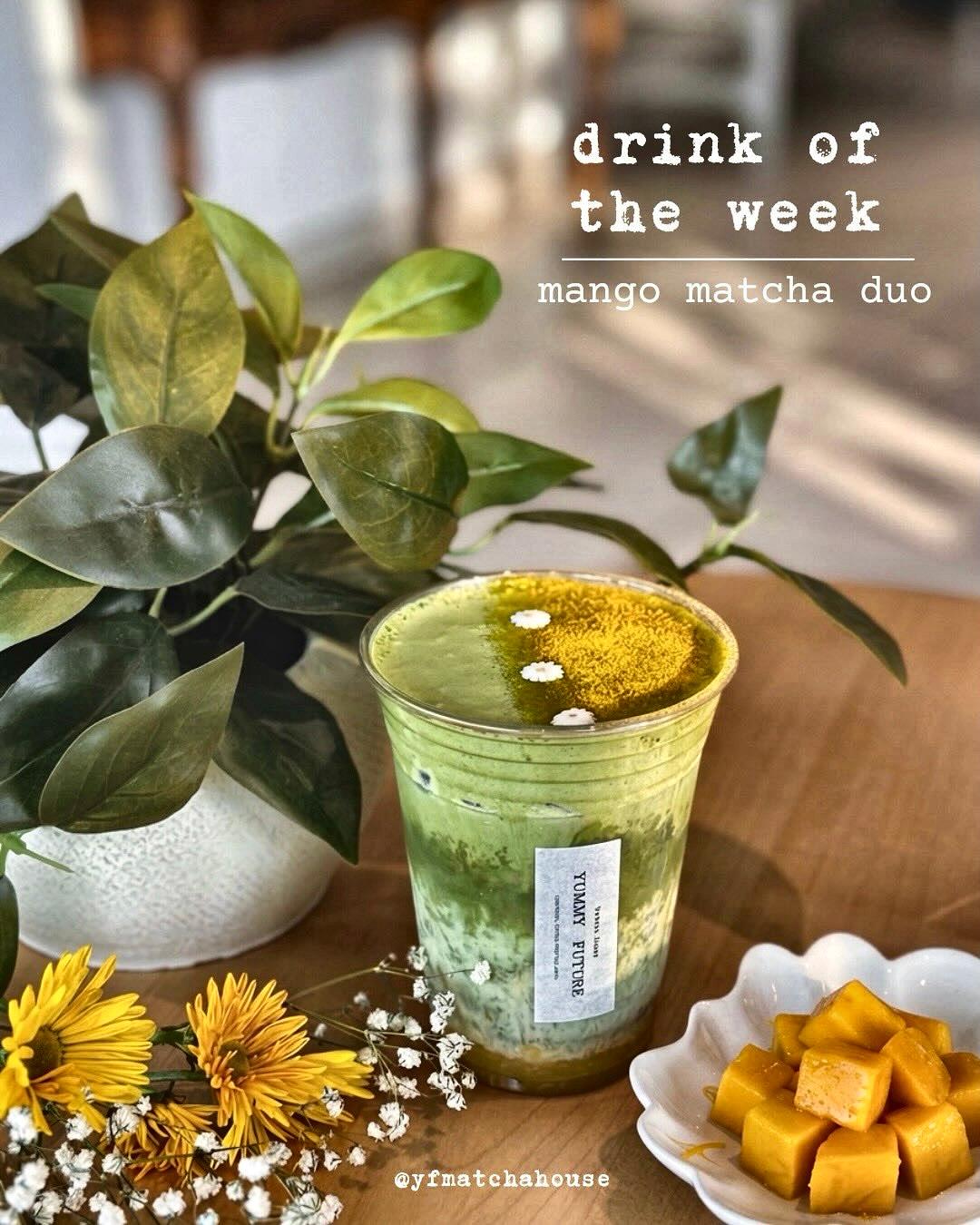
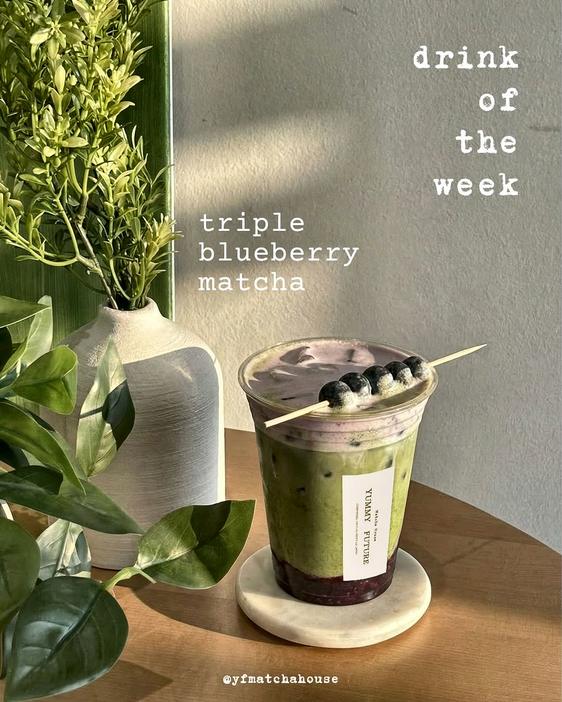
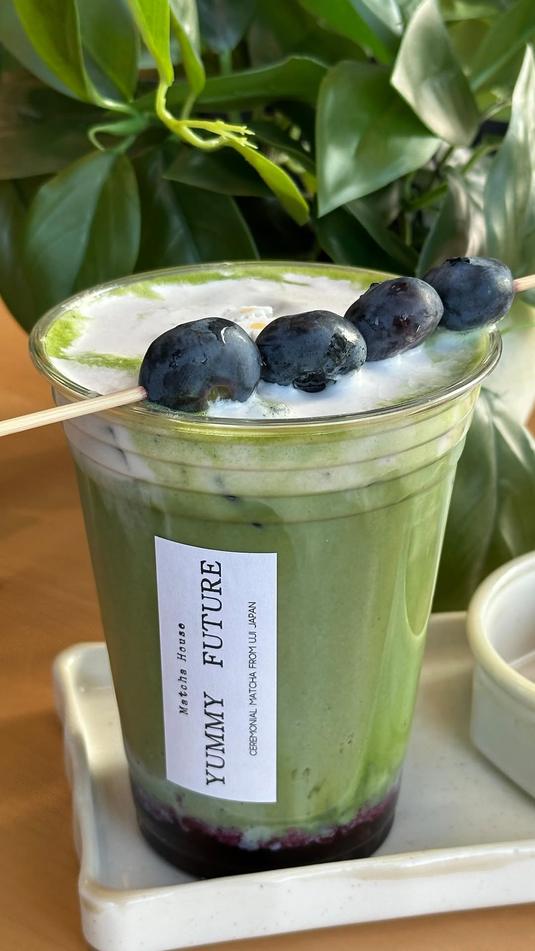
Matcha House launched in March. Customers made it our best-rated store.
5.0 ★︎
334 Google reviews
Matcha House · by September 7, 2026
456
Followers
32,179
Reel views · by Sep 6
@yfmatchahouse on Instagram · followers by August 12, 2026
New brand, new recipes, new visuals — same unit, same software. Concept to live: under a week.
@yfmatchahouse · ours
@izzyphilliips · tagged us
@yfmatchahouse · ours
As seen on10 stories · 7 outlets · 2019–2025 · never paid for a word
Landuyt Center
Yummy Future · Mission 001 · Wefunder 202611 / 20
De-risking
Why we opened our own stores before selling a single unit
We were our own first customer.
In this category, products rarely fail on engineering. They fail when a unit gets built, sold into a venue, and then sits idle — because nobody ever tested whether people would actually pay for the drink.
Demand risk
Against the capital already committed when the answer arrives. Illustrative shape, not measured values.
The usual path
Demand is the last question asked.
Why the risk stays high
1Build the unit
Years of capital, committed up front.
Nothing built yet has faced a paying customer.
→
2Sell it into a venue
The buyer carries the demand risk.
A purchase order is a buyer’s forecast, not a drinker’s decision.
→
3Wait to see if drinks sell
The first real customer shows up here — or doesn’t.
By now, foot traffic, pricing and staffing are someone else’s to control.
→
4Demand answered last
The capital is spent; the unit sits idle.
The answer arrives with no capital left to act on it.
Our path
Demand is the first question answered, with our own money.
Open our own stores
On our own books, not a buyer's.
→
Customers pay at the counter
Every dollar counted off the POS record.
→
It holds across concepts and markets
A second concept in the same town; a second market on the other coast.
→
Only then, sell the unit
Operators come to a store that already earns.
Yummy Future · Mission 001 · Wefunder 202612 / 20
PortabilityChampaign average ticket · Palo Alto weekly revenue · POS orders · bars start at $0
Traction proven. Automation reliable. Ready to scale.
Traction · what a customer pays
The average ticket at our Champaign stores went from $6.16 in 2023 to $8.57 in 2026 — 39% more per order. Customers opted for higher-priced items, a clear recognition of our brand and product value. Monthly orders nearly doubled over the same window.
$8$40
$6.16
$7.23
$7.93
+39% vs 2023
$8.57
2023From Sep
2024
2025
2026To Sep 2
Both Champaign stores, POS orders incl. sales tax. 2023 starts in September.
Automation · operated remotely
Palo Alto is a completely new customer base for us — a mix of tourists and office workers, no campus, no semesters, no student base. It ran straight through summer and winter break, deployed, monitored, and operated 2,100 miles from our home base. And even at that distance, we keep launching new features and improving the product, iteration after iteration, without any issue.
2,100 miles
Palo AltoChampaign
Deployed and operated remotely
10,000+ hours
Bug-free operation
Oct 2025 → today, unbroken
Every unit is profitable. Scale-up is execution now, not a bet.
Yummy Future · Mission 001 · Wefunder 202613 / 20
Where operators want usNon-binding interest · subject to franchise terms and disclosure
25
Operator LOIs
Operators are asking us for stores.
Expansion planPlans, not dates
Open today
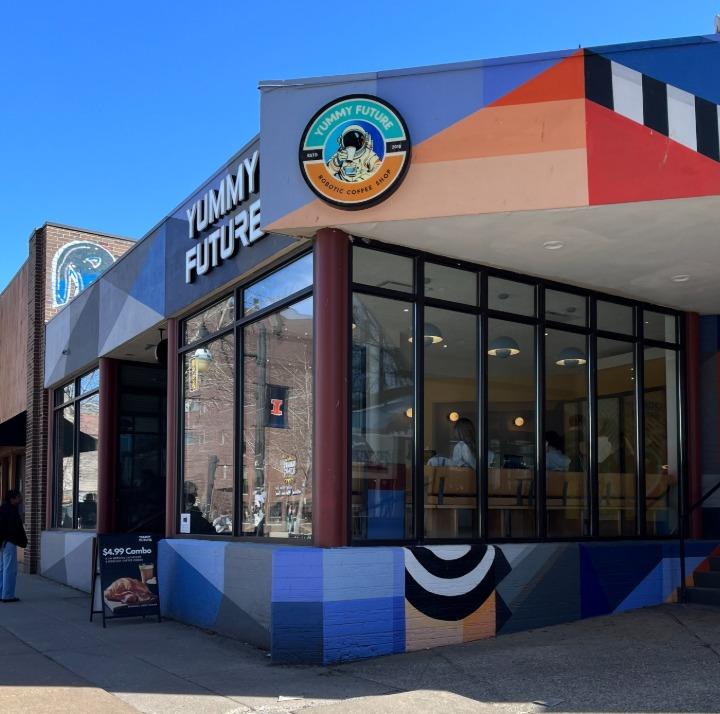
Three locations live — Palo Alto, 170 University Ave; Champaign, 401 & 609 E Green St.
Next · plan
Plan to bring the first franchise locations online and start leasing units to operators.
Then · plan
Plan for franchise count to accelerate as network density compounds. The 25 LOIs are where it starts.
Who is askingInbound — they came to us
01
Owners who already have a storefront
Grocery stores, coffee shops, pizza shops and the like — running businesses that came to us on their own.
02
They want us alongside, not instead
A unit inside the business they already run — complementary, not a replacement for it.
03
Vending groups In discussion
We are in discussions with Sodexo and other vending groups. Nothing is signed and no party is committed.
All of it is non-binding interest — the 25 LOIs, the inbound operator conversations, and the discussions with Sodexo and other vending groups. Nothing has been signed and no party is committed to anything. Forward-looking — actual pace depends on operator readiness, capital, and execution. Today no Yummy Future unit is operated by a third party and no franchise or licensing revenue has been earned.
Yummy Future · Mission 001 · Wefunder 202614 / 20
Next milestoneForward-looking plan
The essence of a store, in a small form factor.
Proven. Now scaling. Three stores are live today on the same platform. Everything we do now is one thing: build the platform once, deploy it many times.
The old way to scale
Scaling used to mean construction.
Every new store was a build-out: cost and timeline sat on the site, only spaces you’re allowed to renovate qualified, and each opening took months. Three stores proved the model — and showed us the ceiling of that path.
The new way to scale
We plan to ship a compact module.
We flipped the company’s center of gravity, from operation-heavy to development-heavy. Branding, recipes and supply chain migrate to the operators who run each location; we keep the layer that compounds.
The module
The core platform, packaged to drop into a venue’s existing setup. Built and tested on our line, delivered ready to place, connected to the site’s existing power and water. No renovation, no build‑out.
How it compounds
Every deployment makes the next one cheaper and faster: more locations, a sharper playbook, better unit economics; better economics mean more operators can say yes. Franchise continues on one channel, modules compound on the other — both on the same platform.
Yummy Future · Mission 001 · Wefunder 202615 / 20
R&DDevelopment footage · our lab
Next-generation hardware, on our own bench.
The page before this one is a plan. This is the work behind it — a two-arm development system on a bench in our lab, handling the cups and bottles a drink order is made of.
Two-arm development system · Yummy Future R&D lab · 2026‑09‑07 · the full take, 1 min 53 sec, silent
Prototype · not deployed
Where this is
Our own development lab. Not a store, not a customer site. No hardware like this is installed at any location today.
What you are watching
The whole take, start to finish, silent — the handling a drink order is made of. Twice a person reaches in and repositions the cups by hand. That is a development bench.
What it is not
Not a product, not a shipping date, not a claim that this runs unattended. The three live stores run on the platform we already shipped — not on this.
Development footage recorded in Yummy Future’s own lab on 2026‑09‑07 — one continuous take, played here in full, one minute fifty‑three seconds, nothing cut. Two things were done to it and nothing else: the audio was removed, and the frame is cropped at the bottom so the operator’s workstation at the edge of the bench is out of shot. A person reaches in by hand twice during the take; this is a development bench, and nothing on this page is a claim that this hardware runs unattended. The hardware shown is an in‑development prototype: it is not installed at any location, not offered for sale, and not part of the operations behind any figure in this deck. Whether and when anything like it ships is a forward‑looking plan, not a commitment, and actual outcomes may differ. See Form C and risk factors.
Yummy Future · Mission 001 · Wefunder 202616 / 20
The askWefunder · 2026
Build with us.
We've shown what it can do. We're just starting. Come build the rest with us.
wefunder.com/yummy
Investment terms · SAFE
$73M
Valuation cap
$60M
Early bird cap
Early bird applies to the first $100K invested. Investor perks at $1K, $5K, $10K, $25K.
See Form C and risk factors before investing. Forward statements describe plans, not guarantees.
Yummy Future · Mission 001 · Wefunder 202617 / 20
MarketPublished industry data
The best coffee should be the closest coffee.
Americans drink ~500 million cups a day. 66% of adults drink it daily — more than any other beverage. Out-of-home coffee alone is a $77B market that resets every morning.
Today, quality and convenience are a trade-off. The best cup in any neighborhood is rarely the nearest one — people still detour, queue, and drive for it. The coffee within arm’s reach — the lobby machine, the hotel kiosk — is coffee people tolerate, not crave. Every morning, millions choose between their time and their taste.
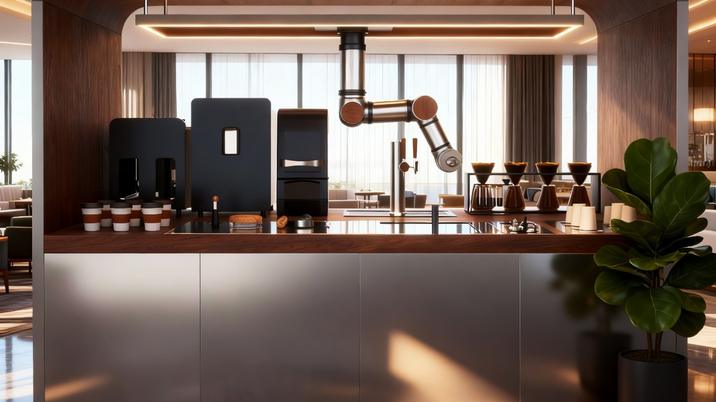
Robotic productivity kills that trade-off. When a unit makes specialty-grade drinks for the cost of a machine, quality stops costing distance: the product moves to the customer. A genuinely great cup, brewed steps from the lobby, the gate, the office floor — even the doorstep — instead of a detour away. Convenience and quality of life, not one at the expense of the other.
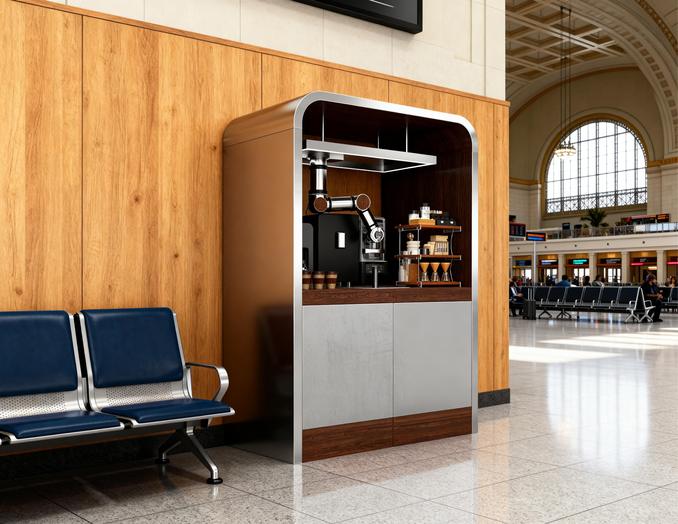
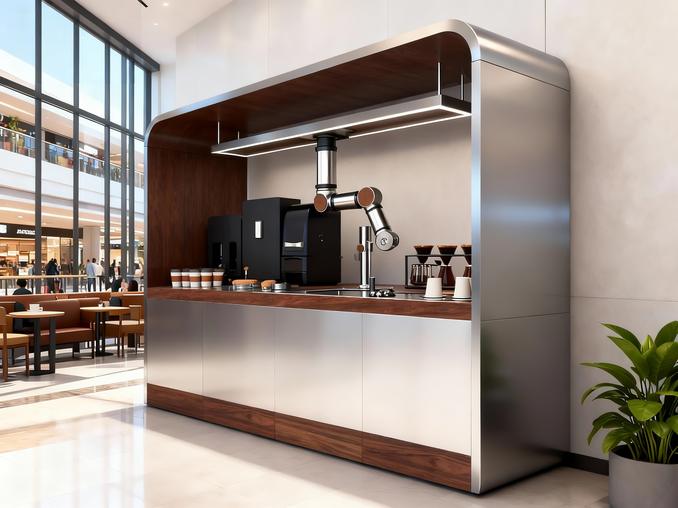
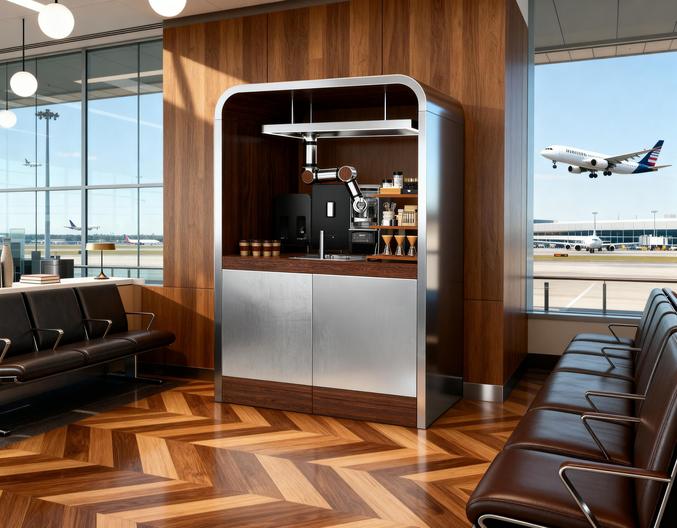
Start where the cup is already bought
55,900US hotel properties
Hotel lobbies
Before sunrise
Rail stations
Every departure
Shopping centres
Ten till nine, daily
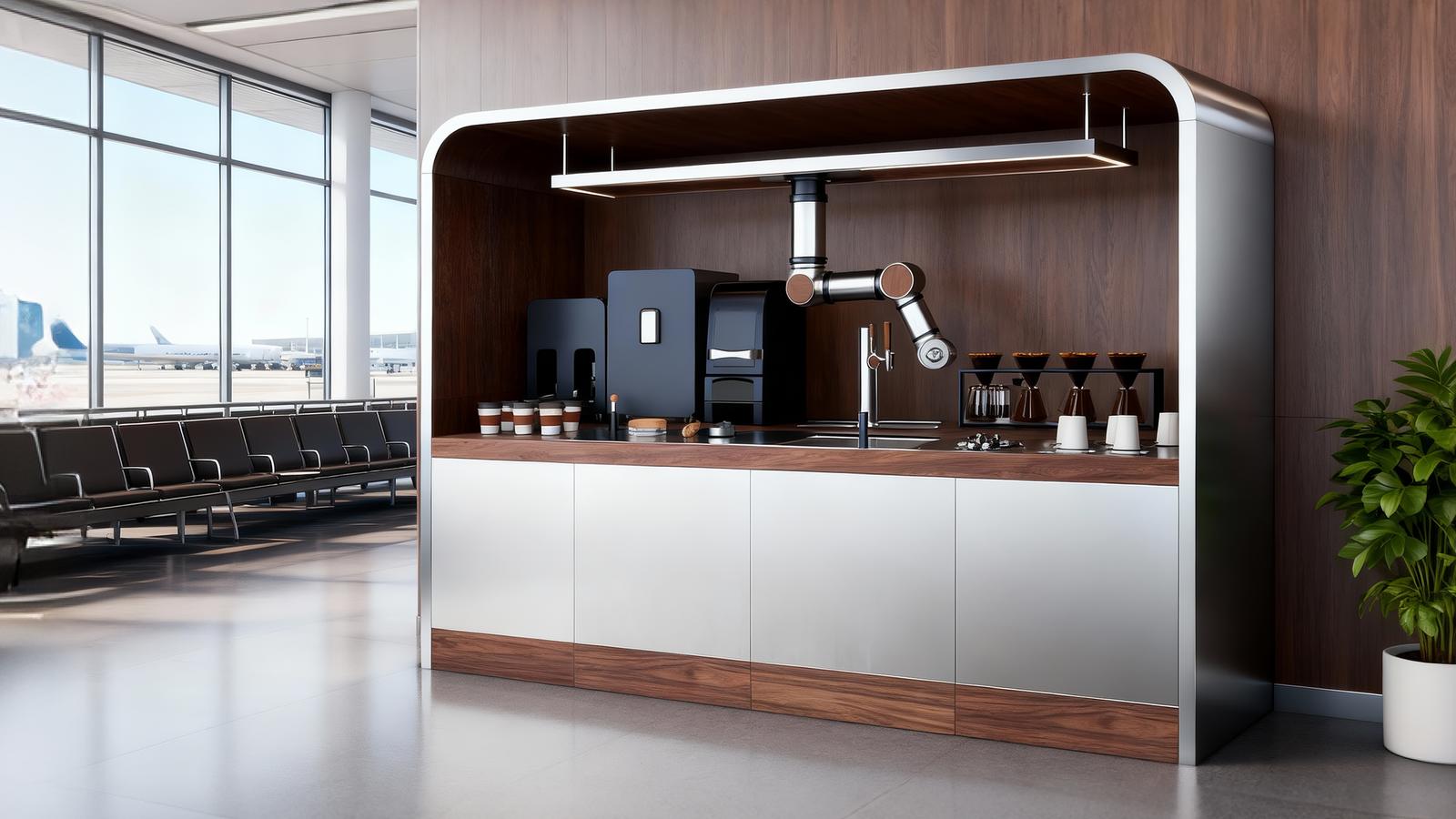
Airport gates
18 hours a day
Then expand where the habit already is: gyms, hospitals, universities, transit hubs, residential lobbies — every place people settle for a bad cup today because the good one is too far. We don’t create the demand. We remove the distance.
Every venue picture on this page is a concept render of the unit in that setting — not an installed location, not a signed site, not a shipping product. No venue shown has agreed to anything. Market sizing only. The figures stated above are published industry statistics; sources are still to be cited on this page. Yummy Future’s share of any of these markets is not projected here. Not committed revenue. See Form C for full discussion.
Yummy Future · Mission 001 · Wefunder 202618 / 20
The deal we take to a venueAn illustrative counter at $200,000 a year · every cost, on both sides
The shifts are the whole problem. Take them out and there is something to split.
0$40K$80K$120K$160K$200K$240K
$200,000
At a loss — −$23,000
Three shifts + upkeep $171,000
Food + utilities $52,000
Our 80%$102,400
Venue 20%$25,600
Stocking + service · $20,000
Food + utilities $52,000
What the counter takes inillustrative · $200,000 a year
With people behind itthree shifts to cover the hours
With our unit in the same spotstill stocked, cleaned and serviced
What a staffed year does here
−$23,000
$223,000 to keep open, against $200,000 through the till
The deal is one sentence: our unit stands in a corner the venue already pays for, and we split what it sells. Nothing gets built. Nobody gets hired.
Shift cover is what kills it. $200,000 is about 64 orders a day — two people at the peak, one either side, seven days. $171,000 of payroll and upkeep before a single cup.
Ours is not free either — restocking, cleaning and service run $20,000 a year at this volume, drawn in the right-hand bar. An eighth of the shift bill, and nothing else separates the two columns.
What a venue would get
+$25,600 a year on a corner it already owns, against −$23,000 for staffing the counter itself. A plan — no venue has agreed to this.
Yummy Future · Mission 001 · Wefunder 202619 / 20
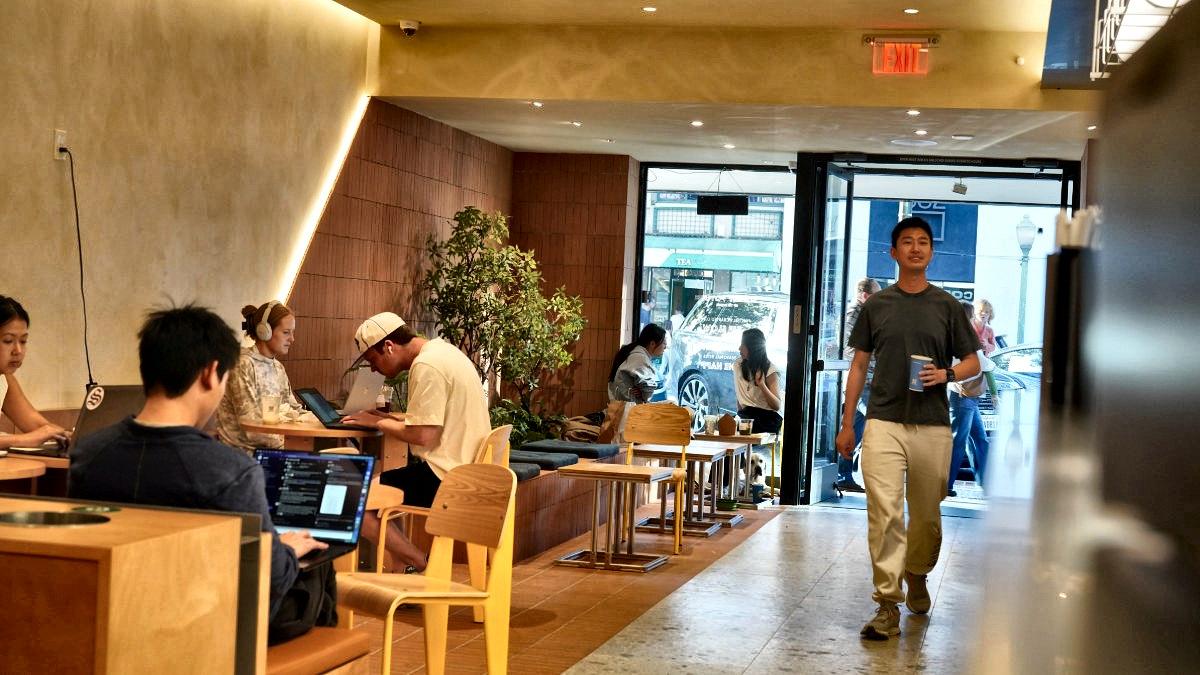
AppendixReference photography · all shot in stores we operate · no licensed stock
What it looks like on the ground.
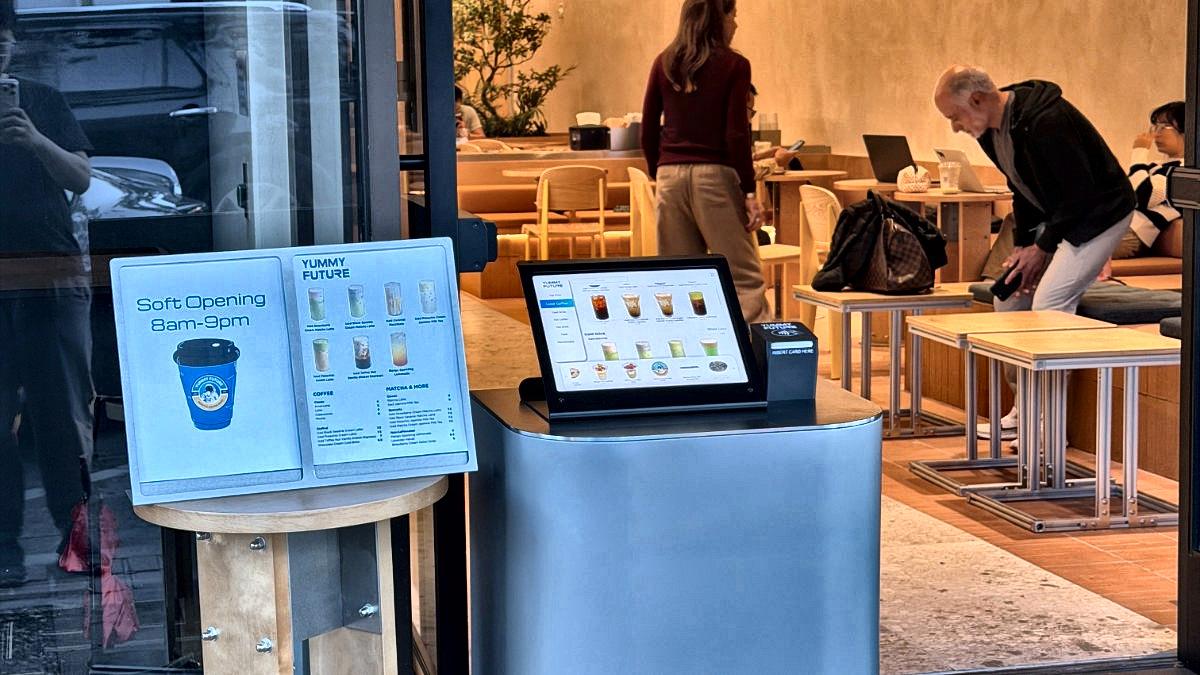
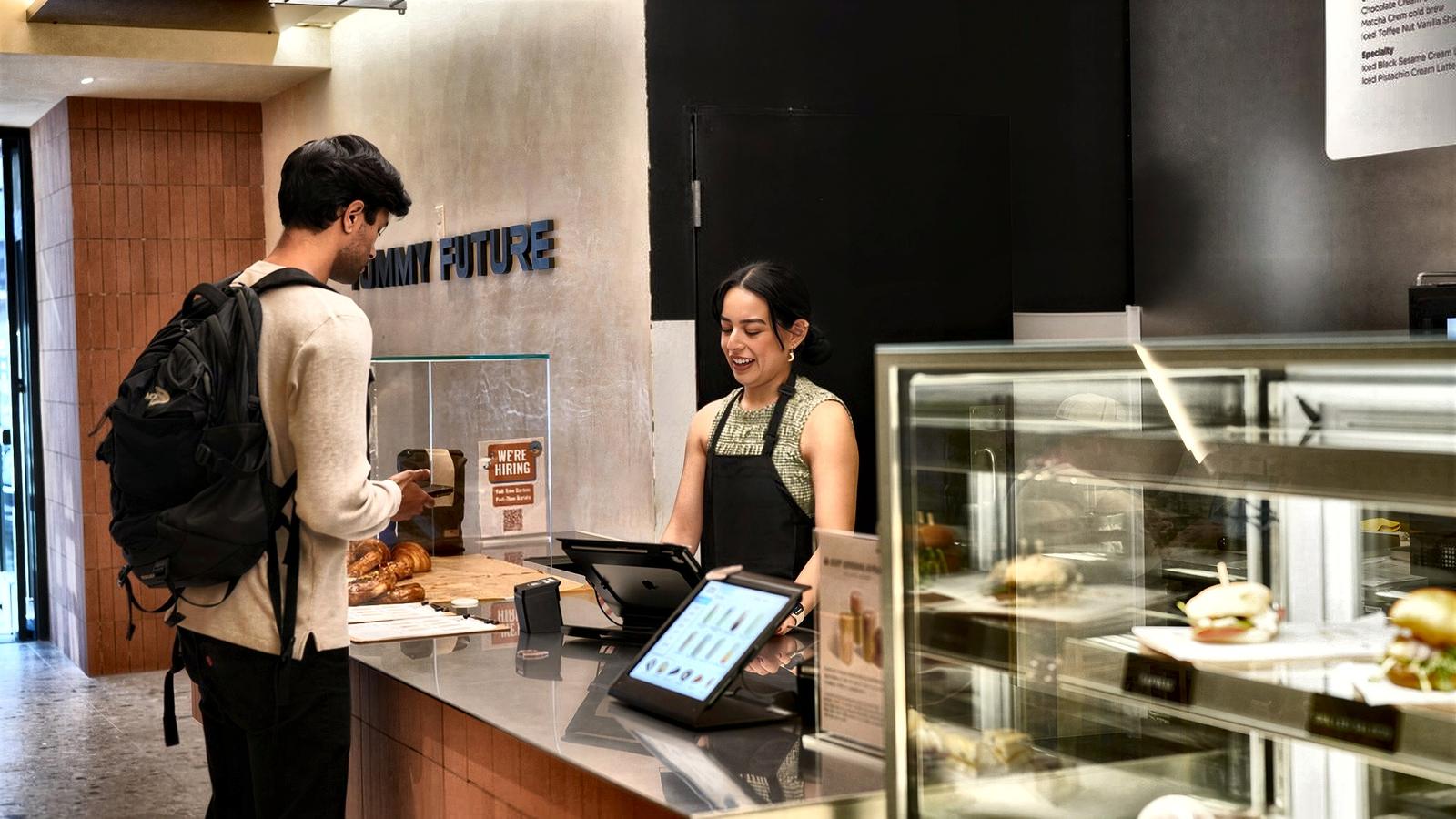
Ordering
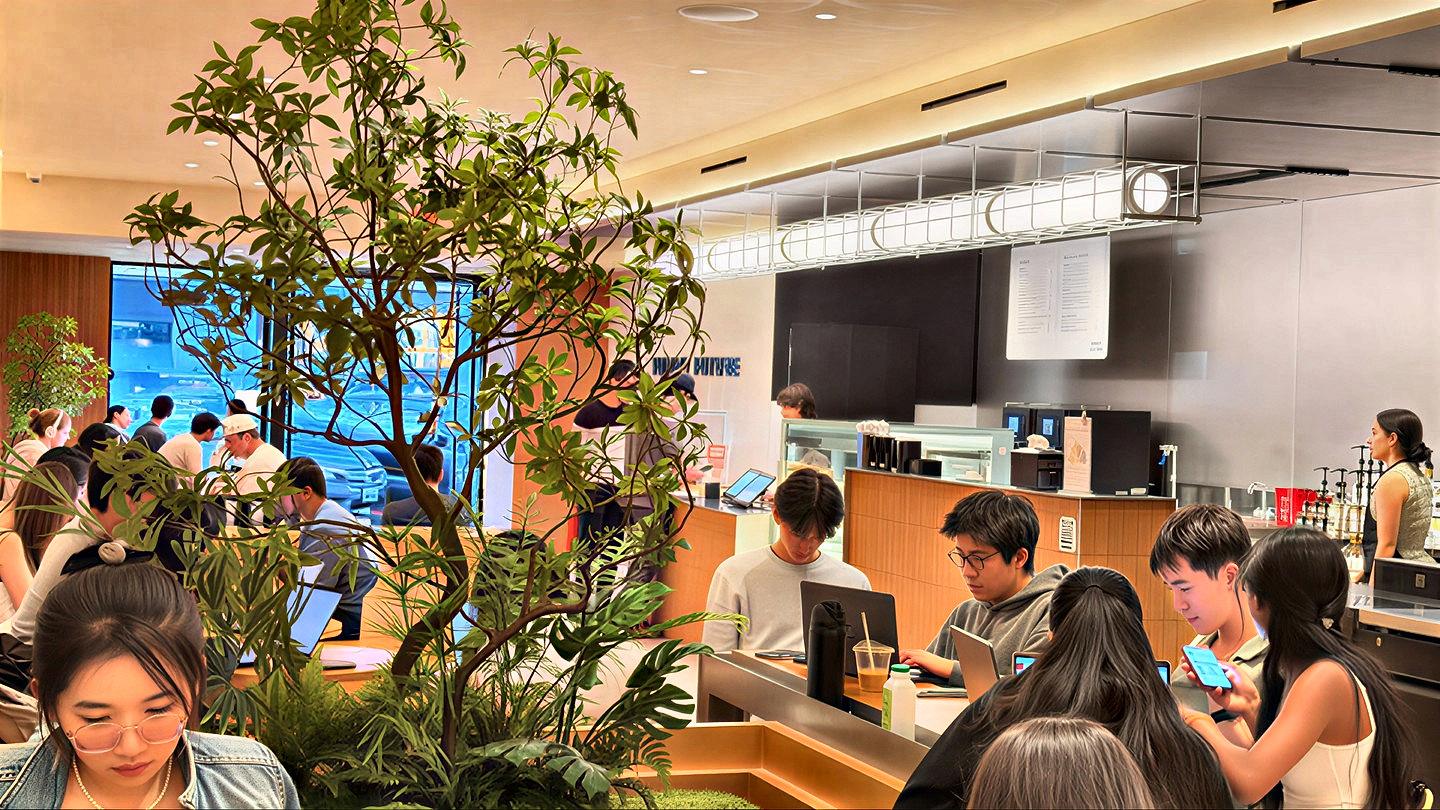
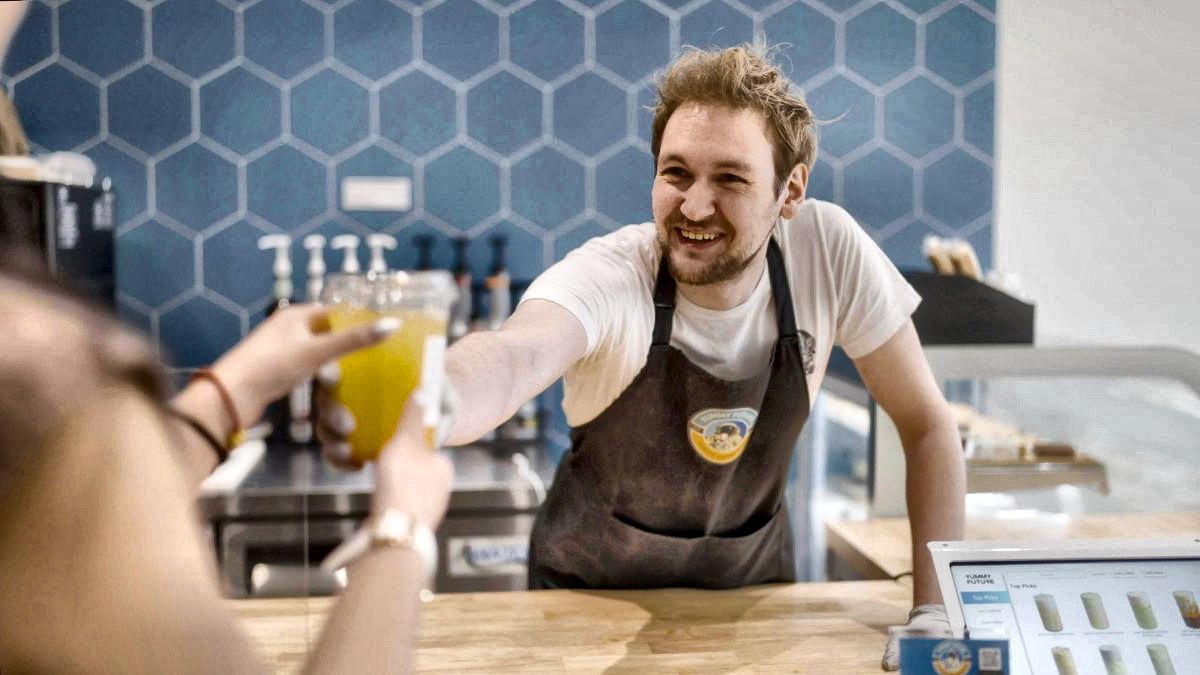
A customer orders at the screen. No register queue, no order read back.
The counter
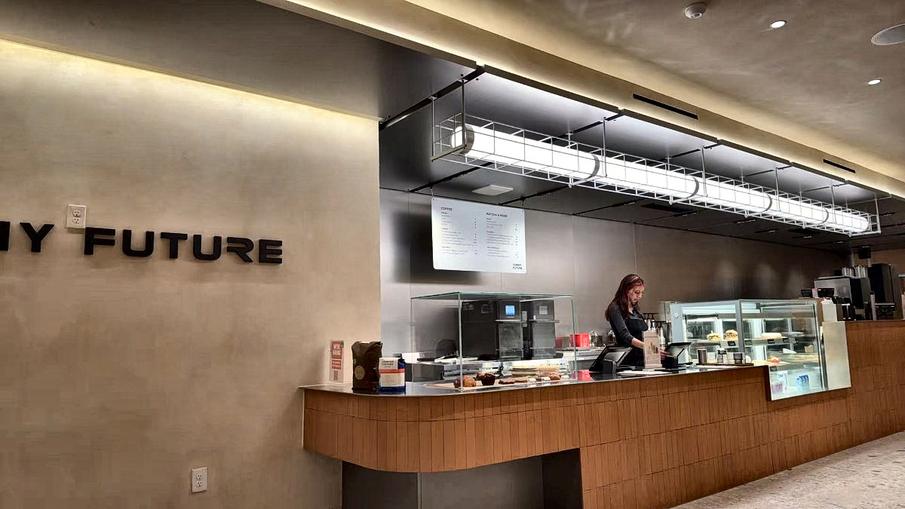
The whole service footprint: one counter, no back-of-house line.
The bar
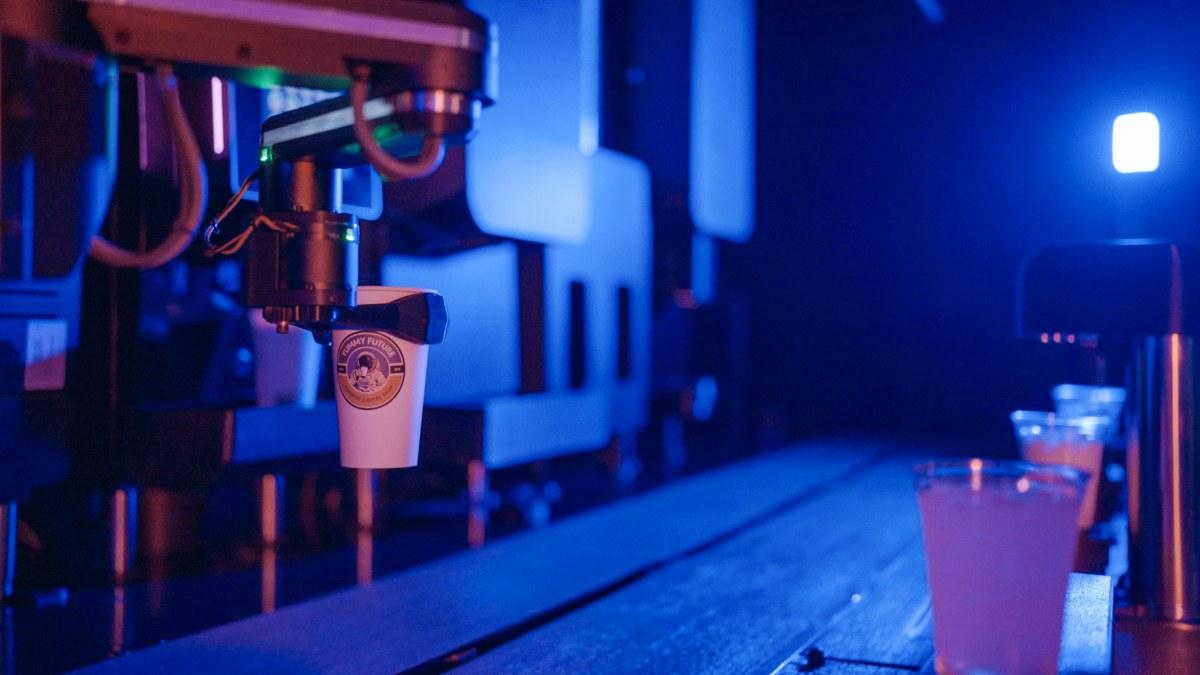
The unit in position behind a working bar, taps and cups either side.
The cup
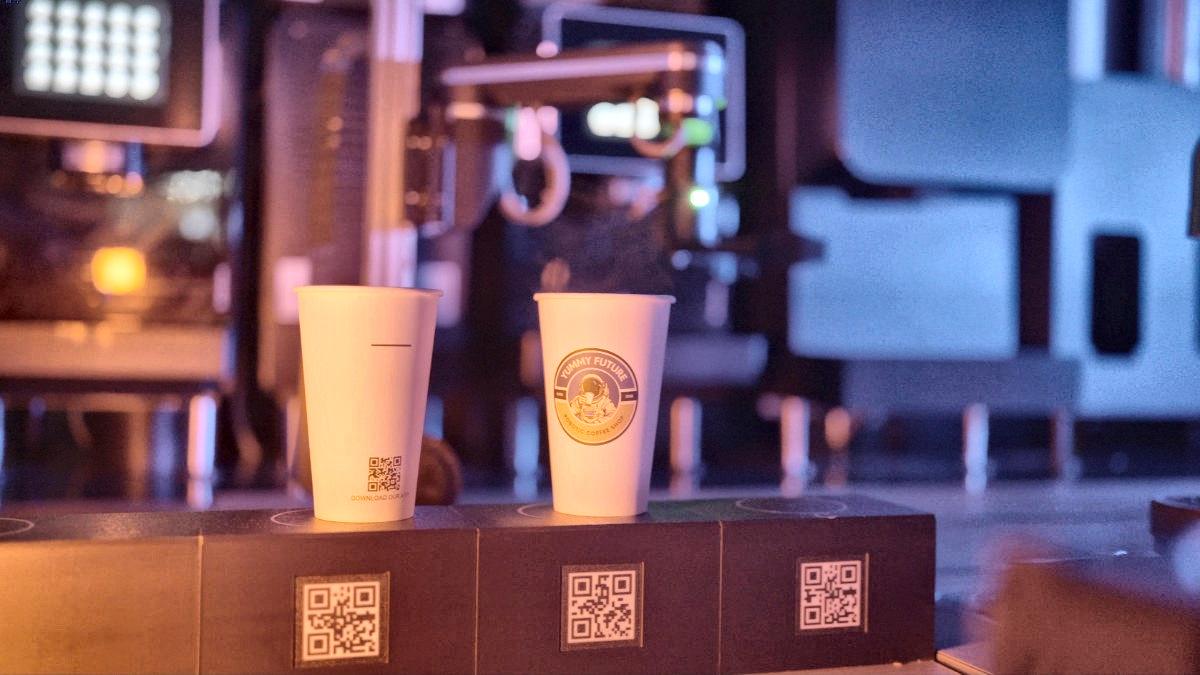
The product the customer actually pays for, under the bar lights.
Install
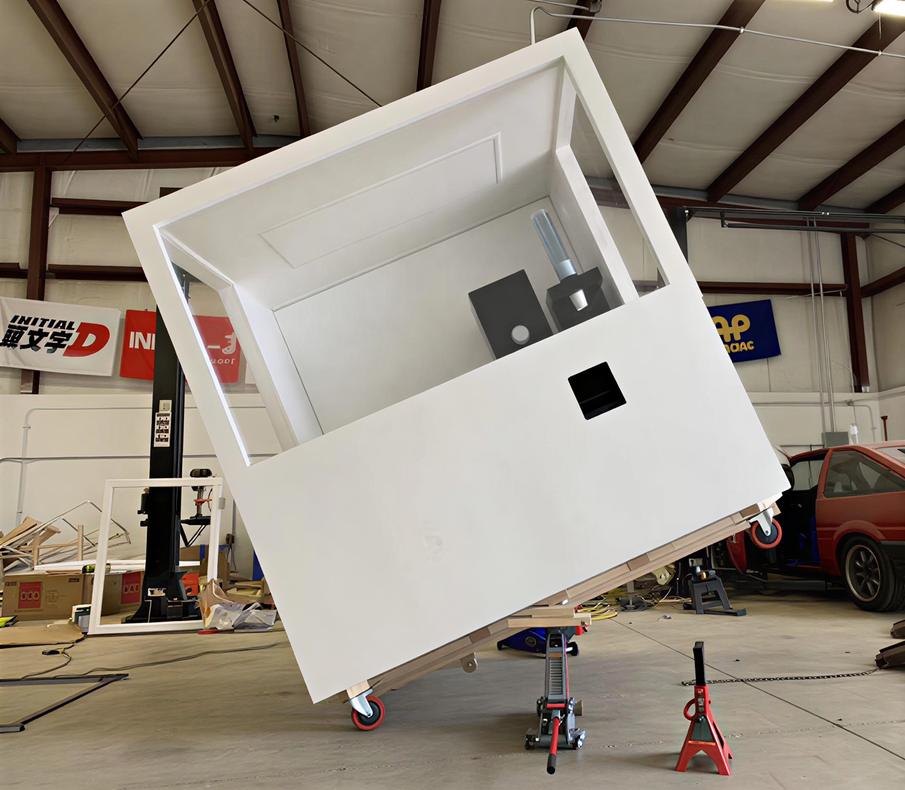
A unit in the workshop, crated. It leaves and arrives as one piece.
About this page
Backup photography for Q&A — not part of the main narrative. Every frame here was taken in a store we operate; none of it is licensed stock.
Financial figures live on the traction and trajectory pages. Nothing on this page is a claim.








 Landuyt Center